Our Mission

The SFA is committed to achieving superior national space power by shaping a Space Force that provides credible deterrence in competition, dominant capability in combat, and professional services for all partners.

SFA is a 501(c)3 Organization.

The SFA performs three major functions:

Research

  • Creative, effective, and fiscally responsible space domain solutions
  • Diverse member and partner expertise
  • Independent research and analysis decision-worthy insights

Inform

  • Publicize expertise and passion of industry professionals
  • Catalog of rich multi-media programming
  • Outreach initiatives to expand general space power literacy

Advocate

  • Pursue a future of security
  • Enable the Space Force to uphold U.S. interests
  • Maintain leadership role in national space power

Spacepower News

SFA on YouTube

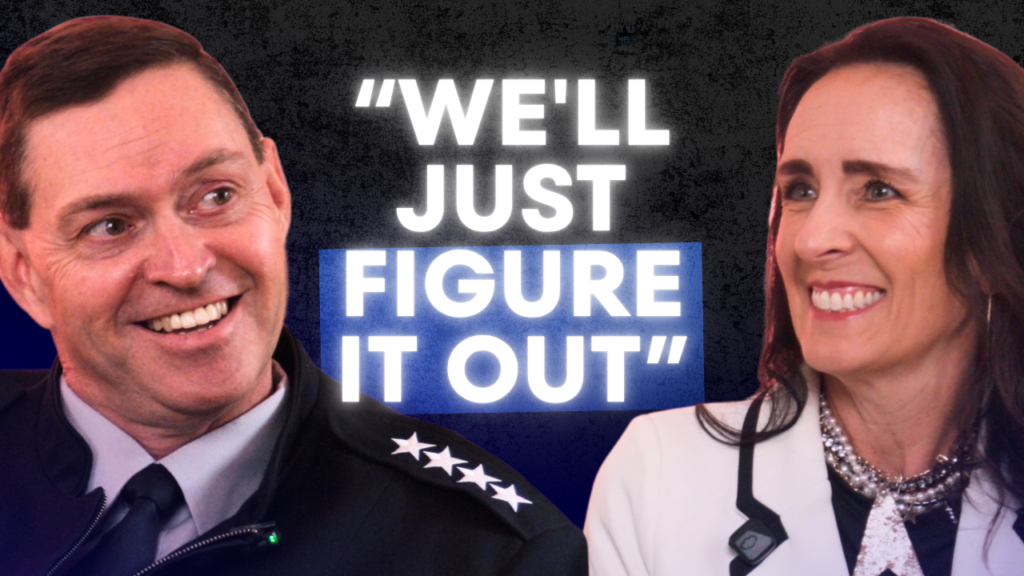
Most people have never heard of the Air Force Research Laboratory. The Space Force couldn't exist without it.

Dr. Andy Williams has been at AFRL since 2003, long enough to watch the space domain go from what he calls a "relatively benign environment" to a fully contested warfighting domain. He now serves as AFRL's Deputy Technology Executive Officer for Space: the single point of contact between the lab and the U.S. Space Force, responsible for making sure the science that starts on a whiteboard at Kirtland actually ends up in a Guardian's hands.

He's the conductor. And in this conversation, recorded live on the Redwire Stage at the 41st Space Symposium, he and SFA Founder Bill Woolf trace the full pipeline, from basic research to operational capability, and don't flinch on where it breaks.

In this episode:

* Why Dr. Williams says space is now more important to the joint fight than air — and what that demands from a research lab
* What the "conductor" role actually looks like day to day, coordinating across AFRL's directorates at the seams, and where the baton gets dropped most often
* How a service still defining itself translates operational gaps into concrete research priorities — and why the only model that works treats S&T, acquisition, and operators as one team
* What always gets cut first in a resource-constrained environment, and why that's a problem that compounds like debt
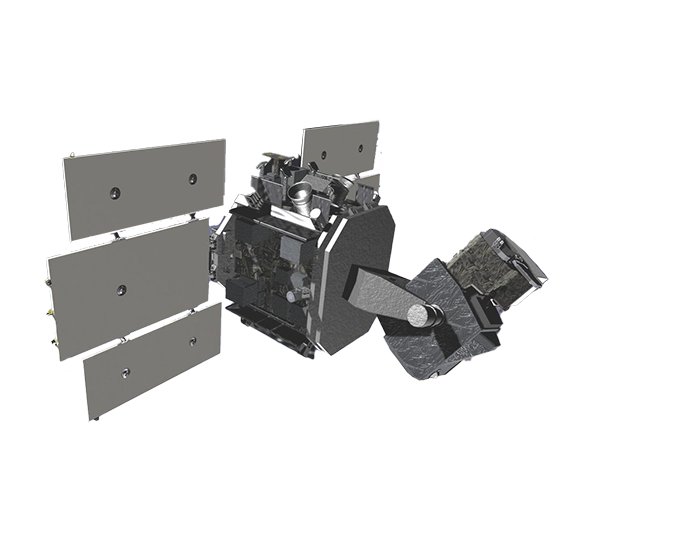
* The ROSA story: three attempts, a decade of basic research, new materials no one planned to develop — and what it teaches about what it actually takes to get a technology across the finish line for the Space Force
* Why science and technology is exactly like a retirement account — and what decades of cuts have cost the service that's supposed to be the most technologically advanced in the world
* Dynamic space operations: the capability Dr. Williams believes could be decisive in future conflict, why the U.S. isn't leading it, and what he means when he says the Space Force needs velocity — not just speed

Recorded at the Redwire Stage at the 41st Space Symposium. Hosted by Bill Woolf

Produced by Ty Holliday

AV by Redwire

Production Support by Omar Mahmoud & Emily Honhart

Dr. Andrew "Andy" Williams is the Deputy Technology Executive Officer for Space at the Air Force Research Laboratory. He serves as AFRL's primary point of contact for the U.S. Space Force, integrating and executing the lab's space science and technology investment strategy and leading engagement across DoD, the Intelligence Community, NASA, industry, and academia. He has been at AFRL since 2003.

Learn more about the U.S. Space Force: https://www.spaceforce.mil/

Learn more about AFRL: https://www.afrl.af.mil/

Join SFA: https://ussfa.org/

Subscribe for more conversations on spacepower, national security, and the future of the space domain.

Most people have never heard of the Air Force Research Laboratory. The Space Force couldn't exist without it.

Dr. Andy Williams has been at AFRL since 2003, long enough to watch the space domain go from what he calls a "relatively benign environment" to a fully contested warfighting domain. He now serves as AFRL's Deputy Technology Executive Officer for Space: the single point of contact between the lab and the U.S. Space Force, responsible for making sure the science that starts on a whiteboard at Kirtland actually ends up in a Guardian's hands.

He's the conductor. And in this conversation, recorded live on the Redwire Stage at the 41st Space Symposium, he and SFA Founder Bill Woolf trace the full pipeline, from basic research to operational capability, and don't flinch on where it breaks.

In this episode:

* Why Dr. Williams says space is now more important to the joint fight than air — and what that demands from a research lab
* What the "conductor" role actually looks like day to day, coordinating across AFRL's directorates at the seams, and where the baton gets dropped most often
* How a service still defining itself translates operational gaps into concrete research priorities — and why the only model that works treats S&T, acquisition, and operators as one team
* What always gets cut first in a resource-constrained environment, and why that's a problem that compounds like debt
* The ROSA story: three attempts, a decade of basic research, new materials no one planned to develop — and what it teaches about what it actually takes to get a technology across the finish line for the Space Force
* Why science and technology is exactly like a retirement account — and what decades of cuts have cost the service that's supposed to be the most technologically advanced in the world
* Dynamic space operations: the capability Dr. Williams believes could be decisive in future conflict, why the U.S. isn't leading it, and what he means when he says the Space Force needs velocity — not just speed

Recorded at the Redwire Stage at the 41st Space Symposium. Hosted by Bill Woolf

Produced by Ty Holliday

AV by Redwire

Production Support by Omar Mahmoud & Emily Honhart

Dr. Andrew "Andy" Williams is the Deputy Technology Executive Officer for Space at the Air Force Research Laboratory. He serves as AFRL's primary point of contact for the U.S. Space Force, integrating and executing the lab's space science and technology investment strategy and leading engagement across DoD, the Intelligence Community, NASA, industry, and academia. He has been at AFRL since 2003.

Learn more about the U.S. Space Force: https://www.spaceforce.mil/

Learn more about AFRL: https://www.afrl.af.mil/

Join SFA: https://ussfa.org/

Subscribe for more conversations on spacepower, national security, and the future of the space domain.

13 1

YouTube Video UExsYmpKTHJBR2toSjYybS1GWnNxUzFEaHZyWUYya3FhVC5GNDg1Njc1QzZERjlFRjE5

The Lab Behind the Force: How Military Research Becomes Space Warfighting Capability

Space Force Association May 15, 2026 11:00 am

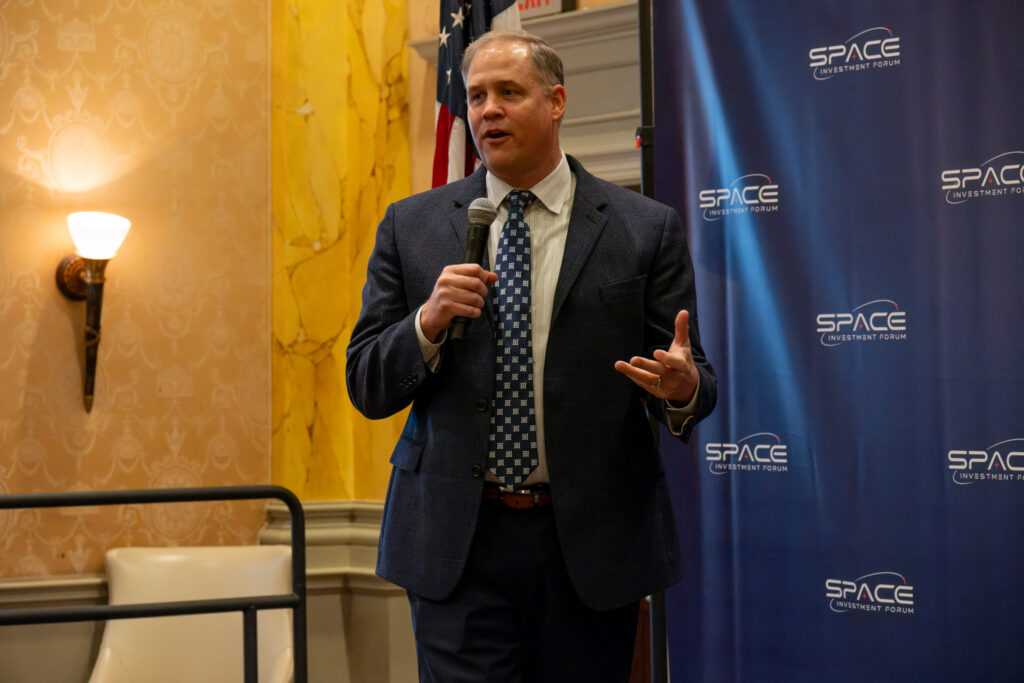
What happens to the American economy, not just the American military, if China wins the space race?

In this episode of the Spacepower Podcast, SFA Founder and host Bill Woolf sits down with Randy Schriver, Chair of the U.S.-China Economic and Security Review Commission, and Mike Kuiken, its Vice Chair, joined by co-host Dillon "Brick" Cox, Chair of SFA's National Spacepower Center Committee. Together they work through one of the most important questions in national security that most Americans aren't asking: what does contested space actually cost us?

The Commission's 2025 Annual Report to Congress was approved unanimously by all twelve commissioners, six Republicans, six Democrats. In a Washington where almost nothing gets bipartisan agreement, that consensus is the story.

Randy Schriver served as Assistant Secretary of Defense for Indo-Pacific Security Affairs. He describes returning to government, getting his clearances back, and walking into his first briefing: "My mind exploded." General Saltzman called China's space advancement "mind-boggling." That's not a phrase you hear from a four-star general.


Mike Kuiken spent nearly 23 years in the U.S. Senate, over a decade on the Armed Services Committee and then as Senate Majority Leader Schumer's National Security Advisor. He led the legislative strategy to pass the CHIPS Act.

In this conversation, Randy, Mike, and Brick discuss:

 Why China's space advancement exceeded even experienced Pentagon officials' expectations
The carrier battle group problem: how China went from intermittent tracking to persistent targeting of U.S. forces transiting the Pacific
What breaks first for ordinary Americans: GPS, telecommunications, financial timing, the power grid
Why China's military-civil fusion means there is no such thing as a Chinese civilian space program
The CHIPS Act parallel: are we making the same mistake in space that we made in semiconductors?
Why the Space Force has a visibility problem no other service faces, and why that makes building legislative support nearly impossible
What it would take to make a Fortune 500 CEO truly understand 48 hours without GPS
The one thing Randy and Mike would tell a lawmaker who wants to do the right thing but doesn't know where to start

Hosted by Bill Woolf
Co-hosted by Dillon "Brick" Cox
Produced by Ty Holliday

Randy Schriver, Chair, U.S.-China Economic and Security Review Commission. Previously served as Assistant Secretary of Defense for Indo-Pacific Security Affairs.

Mike Kuiken, Vice Chair, U.S.-China Economic and Security Review Commission. Nearly 23 years in the U.S. Senate, including over a decade on the Armed Services Committee and as Senate Majority Leader Schumer's National Security Advisor. Led the legislative strategy to pass the CHIPS and Science Act.

Read the 2025 Annual Report to Congress: https://www.uscc.gov/annual-report/2025-annual-report-congress

Learn more about SFA's National Spacepower Center: https://ussfa.org/national-space-center/

Learn more about the U.S. Space Force: https://www.spaceforce.mil/

Join SFA: https://ussfa.org/

Subscribe for more conversations on spacepower, national security, and the future of the space domain.

What happens to the American economy, not just the American military, if China wins the space race?

In this episode of the Spacepower Podcast, SFA Founder and host Bill Woolf sits down with Randy Schriver, Chair of the U.S.-China Economic and Security Review Commission, and Mike Kuiken, its Vice Chair, joined by co-host Dillon "Brick" Cox, Chair of SFA's National Spacepower Center Committee. Together they work through one of the most important questions in national security that most Americans aren't asking: what does contested space actually cost us?

The Commission's 2025 Annual Report to Congress was approved unanimously by all twelve commissioners, six Republicans, six Democrats. In a Washington where almost nothing gets bipartisan agreement, that consensus is the story.

Randy Schriver served as Assistant Secretary of Defense for Indo-Pacific Security Affairs. He describes returning to government, getting his clearances back, and walking into his first briefing: "My mind exploded." General Saltzman called China's space advancement "mind-boggling." That's not a phrase you hear from a four-star general.


Mike Kuiken spent nearly 23 years in the U.S. Senate, over a decade on the Armed Services Committee and then as Senate Majority Leader Schumer's National Security Advisor. He led the legislative strategy to pass the CHIPS Act.

In this conversation, Randy, Mike, and Brick discuss:

Why China's space advancement exceeded even experienced Pentagon officials' expectations
The carrier battle group problem: how China went from intermittent tracking to persistent targeting of U.S. forces transiting the Pacific
What breaks first for ordinary Americans: GPS, telecommunications, financial timing, the power grid
Why China's military-civil fusion means there is no such thing as a Chinese civilian space program
The CHIPS Act parallel: are we making the same mistake in space that we made in semiconductors?
Why the Space Force has a visibility problem no other service faces, and why that makes building legislative support nearly impossible
What it would take to make a Fortune 500 CEO truly understand 48 hours without GPS
The one thing Randy and Mike would tell a lawmaker who wants to do the right thing but doesn't know where to start

Hosted by Bill Woolf
Co-hosted by Dillon "Brick" Cox
Produced by Ty Holliday

Randy Schriver, Chair, U.S.-China Economic and Security Review Commission. Previously served as Assistant Secretary of Defense for Indo-Pacific Security Affairs.

Mike Kuiken, Vice Chair, U.S.-China Economic and Security Review Commission. Nearly 23 years in the U.S. Senate, including over a decade on the Armed Services Committee and as Senate Majority Leader Schumer's National Security Advisor. Led the legislative strategy to pass the CHIPS and Science Act.

Read the 2025 Annual Report to Congress: https://www.uscc.gov/annual-report/2025-annual-report-congress

Learn more about SFA's National Spacepower Center: https://ussfa.org/national-space-center/

Learn more about the U.S. Space Force: https://www.spaceforce.mil/

Join SFA: https://ussfa.org/

Subscribe for more conversations on spacepower, national security, and the future of the space domain.

23 9

YouTube Video UExsYmpKTHJBR2toSjYybS1GWnNxUzFEaHZyWUYya3FhVC4xOTEzQzhBQzU3MDNDNjcz

The China Space Problem: What Congress Knows, What Americans Don't, and What Happens If We Lose

Space Force Association May 13, 2026 12:39 pm

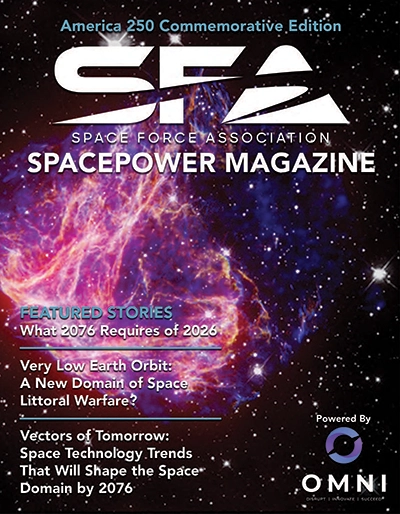
Spacepower Magazine: Winter 2025 Issue

Spacepower Conference 2025

Featuring:

🔹A message from President & CEO, Bill “Hipppie” Woolf, on the 3rd annual Spacepoer Conference.

🔹 In, “The Warfighter Ethos: The Beating Heart Driving SSC’s Internal Transformation,” USSF Lt. Gen Phil Garrant explains how the SSC works toward the mission of fighting & winning in space.

🔹 SSC Director, Col. Timothy Trimailo, explains COMSO and how it’s working to integrate commercial speed, flexibility, and innovation into all mission areas.

Space force Events

We have events at our chapters all over the country. Many of the events are open to non-members, so check out our calendar and learn more about the space community.

You are leaving our site.

You are now leaving Space Force Association’s website and navigating to:.